

Say the Right Thing?
Oooh! Here’s a hot one from the archives, with my updated notes in italics. We’ve had a lot more information around how to deal with neuro-diversity (which I actually think is neuro-typical, and neuro-typical is neuro-rare, which is another story entirely). With these updates and conversations, most of this is still relevant, but for a completely different reason. Read my then vs. now!
If you want to know more about job seeking: please join me at my Job Seeker webinar on March 13th, at 11:30 PST. I’m posting some oldie-and-still-relevant information, some updated information, and the like as I prepare to help people navigate the upcoming changes in looking for work.
The most common failure in interviews…
The number one issue I see in candidates during an interview is their need to be politically correct. I don’t mean real politics, but their own internal head politics about needing to sound proper. The problem is that when a person focuses on being proper, they lose what makes them real.
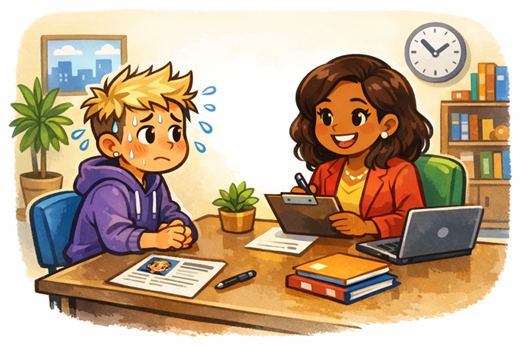
I don’t hire people based on their ability to say the right thing at the right time.
I hire people because they prove they can get the job done, and that makes me want to work with them.
Then | Now |
Case in point, at a previous job we were sharing our frustration that people focus too hard on being what they think we want them to be, and lose their authenticity in the process. Not 20 minutes later, we were in an interview in which we asked a person, “Why do you want to work for us?” He gave us a very safe answer about his ability to grow with the company. While that may be a factor for some people, I could tell by his body language, lack of eye contact, and how hard he was thinking that he didn’t feel what he said. He lost sight of his goals and himself in order to look good in the interview, and it backfired. | We knew this was not a heartfelt question because back then, you would Google “how should I answer [insert interview question]?” This was one of the top answers that would pop out. It would be generic and just enough to sound good. To a newer interviewer, that might be passable, but to a group of managers who had been doing this for over a decade, and who could see other ways the person behaved in the interview, we were able to see that this answer was not true to what they were seeking. It just “sounds good” to say there is a want of advancement or growth. This is why my old school CLAMS methodology still works. Figure out the key driver for the position and ensure the candidate has it. And the same goes for the candidate; they need to know their motivators and that the long-term objective matches the job opening. |
And the next clarification from old to updated!
Then | Now |
|
On the heels of that interview, the next person came in. We asked the same question, but the result was a very heartfelt answer about missing his family for six-months due to work. He didn’t want to let that happen again. His body language, his eye contact, and the definite passion in his response convinced us he was true to his purpose. His responses weren’t perfect; they weren’t all well thought out, but they were genuine. | I didn’t put a lot of emphasis on eye-contact back then, even though I listed it. But this is before I truly started rebelling against best practices, which are often just common practices. What I still wholeheartedly believe is that people who stay the longest and are the most productive ask the questions that are truest to their needs and desires. Very rarely is growth (advancement) the number one driver of a person. I find most people want predictability and raises, growth into management or larger roles is often secondary or further down the list. They want to do a good job and know that the company recognizes that.What is happening is we had a wave of companies hiring for future management, then get pi$$y when turnover happened. So, candidates were playing the game, and then leaving over broken promises, broken systems, and lack of training. |
Yep, we offered the job to the latter candidate.
So, what can you do to make sure you go into an interview as a real person? Sometimes a person needs a little reminder who they are. You can take a personality test; there are several to choose from: Myers-Briggs, CVI, DiSC, P3, Personalysis…the list goes on and on.
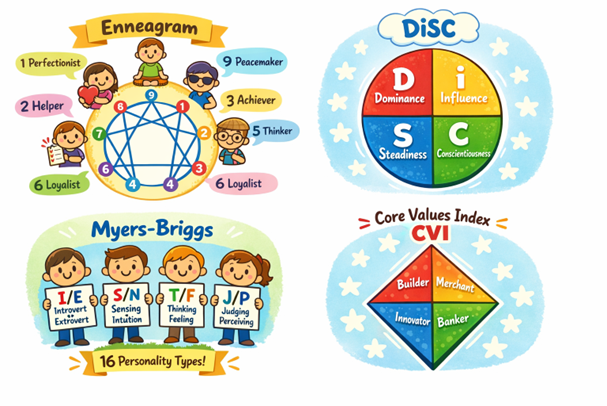
Let the test remind you who you are.
Do you spend time trying to be an Introvert when you are really an Extrovert? Do you play the I-am-just-here-to-get-along when you really are happier, leading-the-charge? Let your colors fly in an interview. The employer will ultimately be better-off knowing you and your unique talents.
What can you use the test for?
To better explain your decision making, detail orientation, taking charge, helping others learn… the list goes on. When you can better point to that, you can better utilize your strengths against the needs of the opening.
You’ll be more likely to get the job that is right for you, not your perfect interview alter-ego. And you’ll be happier.

About FloatHR
Daava Mills (that’s me!) has been in the trenches of Recruiting and Retention for over 25 years. I love to help companies explore what works for them, not what other companies are doing.
I work with companies up and down the I-5 corridor within the Pacific NW, as well as nationally. Living in a small town with a show dog, a hunting dog, and a rescue kitty, with my teen and husband, I meet a lot of people via video, and sometimes over coffee. When not geeking out over hiring and interview matters, you can find me doing pretty much anything to avoid the dreaded pile of laundry.
If you are a company looking to contact me, please do so via my Contact Page.